A customer orders a medium. At 11pm they realise they needed a large.
From that moment there are only two paths. In the first, nothing happens. The order picks in the morning, ships, arrives, and comes back three weeks later as a return: a refund, a return label, an inspection, a restock, and often a markdown. In the second, the customer opens the order confirmation, swaps the variant in about thirty seconds, and the warehouse picks the right size the first time.
Same customer. Same mistake. One path costs you the margin on the order. The other costs you nothing.
Most advice about reducing returns on Shopify starts after the parcel has been delivered — better return portals, faster exchange flows, smarter reverse logistics. That work matters, but it is triage. This guide covers the part almost nobody addresses: preventing the return during the window between checkout and fulfillment, when the order is still just a row in a database and changing it is free.
This guide explains:
What a return actually costs once every step is counted
Why most return decisions are made hours after checkout, not after delivery
How returns, exchanges, and pre-fulfillment edits differ operationally
Five specific mechanics that prevent returns before shipping
How to measure prevented returns rather than processed ones
What Returns Actually Cost a Shopify Store
A return is not one cost. It is a chain of them, and most stores only track the first link.
When a returned order is fully accounted for, the store absorbs the outbound shipping it already paid, the return shipping if it offers free returns, the labour to receive and inspect the item, the labour to restock or write it off, the payment processing that is not always fully recovered, and the difference between the original price and whatever the item eventually resells for. On top of that sits the support time spent authorising the return and answering questions about the refund.
The Visible Cost
The refund and the return label. These appear in your reporting, which is why they are the numbers most merchants quote when asked what returns cost them.
The Invisible Cost
Everything else. Reverse logistics handling, inspection labour, restocking, resale markdown on opened or seasonal goods, and the support hours attached to each case. These costs are spread across shipping bills, payroll, and inventory adjustments, so they rarely get attributed back to returns at all.
The practical consequence is that returns are almost always more expensive than they appear in a Shopify report, which is what makes prevention worth more than efficient processing.
Why Customers Return Orders, and When They Actually Decide
The most useful reframe in return prevention is this: the decision to return is usually made long before the package arrives.
A customer who ordered the wrong size knows it the same evening. A customer who typed the wrong apartment number knows it when the confirmation email lands. A customer who forgot an item knows it immediately. In each case the return is already determined at that moment. Delivery is not the decision point — it is the paperwork.
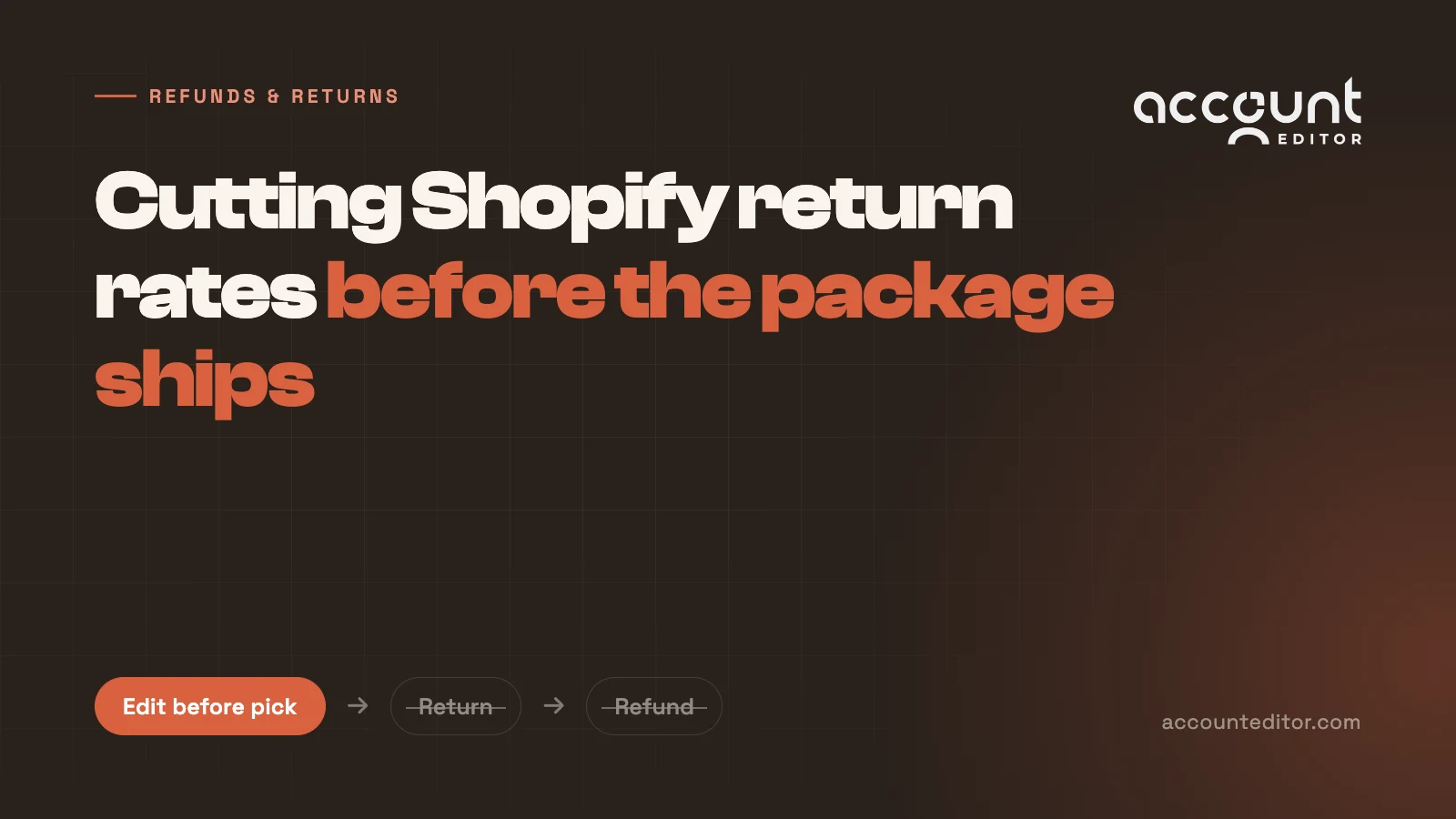
This matters because it means the intervention window is not after delivery. It is in the hours right after checkout, while the order is still unfulfilled and changing it costs nothing.
Size and Variant Errors
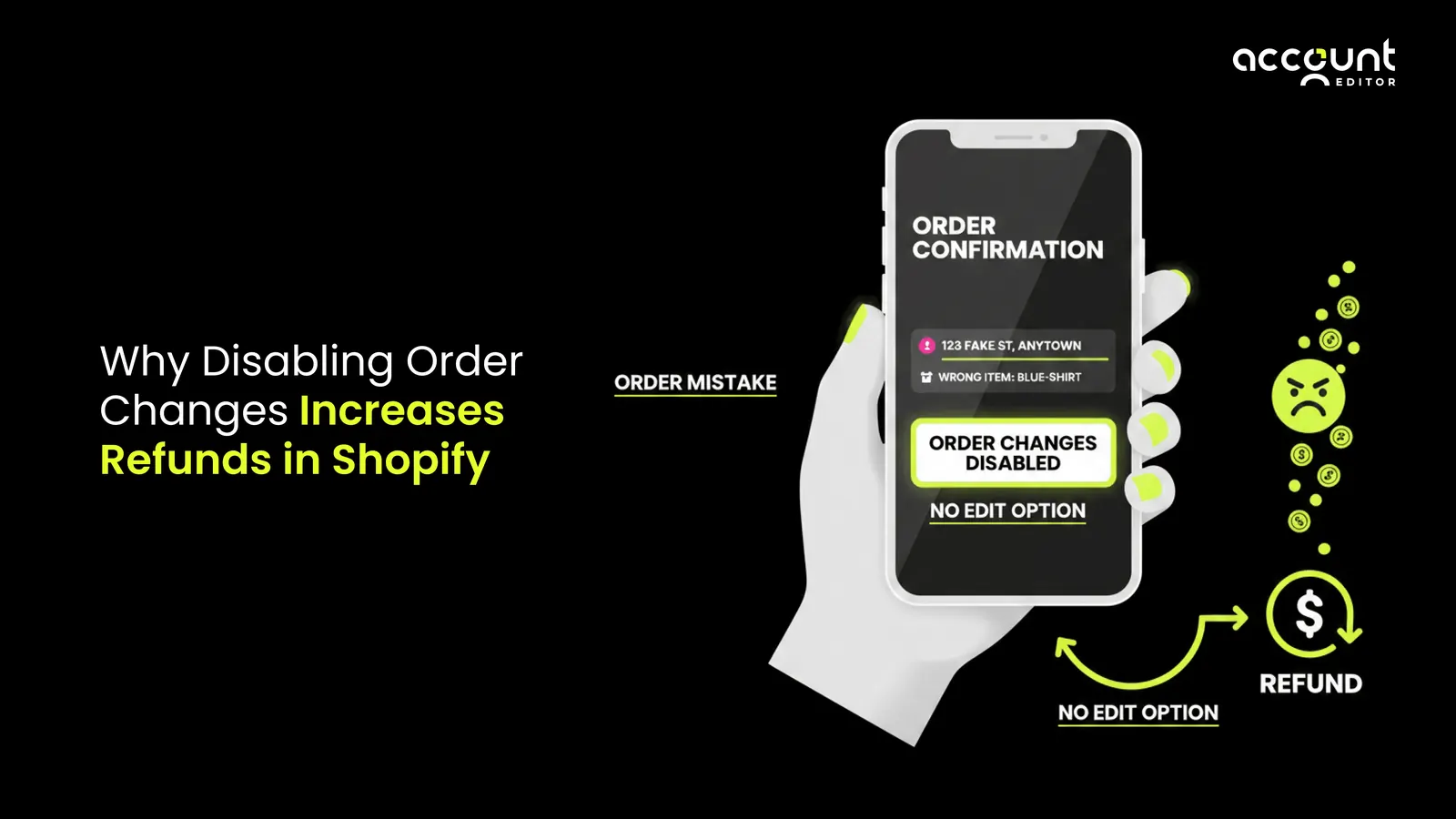
Sizing is the single most common driver of returns in apparel, footwear, and any category where fit is subjective. The customer is not dissatisfied with the product — they picked the wrong option. A return is a very expensive way to change a variant ID.
Address Errors and Failed Deliveries
A missing unit number or a transposed postcode does not usually produce a normal return. It produces a failed delivery, a parcel in carrier limbo, a support thread, and eventually a refund or reship. Address corrections after checkout are among the cheapest returns to prevent, because catching them before the label prints eliminates the entire failure path.
Forgotten Items and Duplicate Orders
A customer who forgets an item has two options if you do not let them edit: place a second order, or cancel and start again. The second order arrives separately, doubles your shipping cost, and gets partially returned when they consolidate. This is a self-inflicted return created by the absence of an edit path.
Changed Minds and Bracketing
Some returns are genuine buyer's remorse, and some customers deliberately order multiple sizes intending to return the ones that do not fit. Prevention does not eliminate these. It does, however, stop them from being buried under the preventable cases, which is what lets you see your real return rate.
Returns vs Exchanges vs Pre-Fulfillment Edits
These three are frequently discussed as if they were variations of the same process. Operationally they are not remotely comparable.
A return happens after delivery and reverses a completed transaction. An exchange also happens after delivery, but substitutes goods instead of refunding. A pre-fulfillment edit happens before the order is picked and modifies it in place, so no reverse movement of goods ever occurs.
Factor | Return | Exchange | Pre-fulfillment edit |
|---|---|---|---|
When it happens | After delivery | After delivery | Before the order is picked |
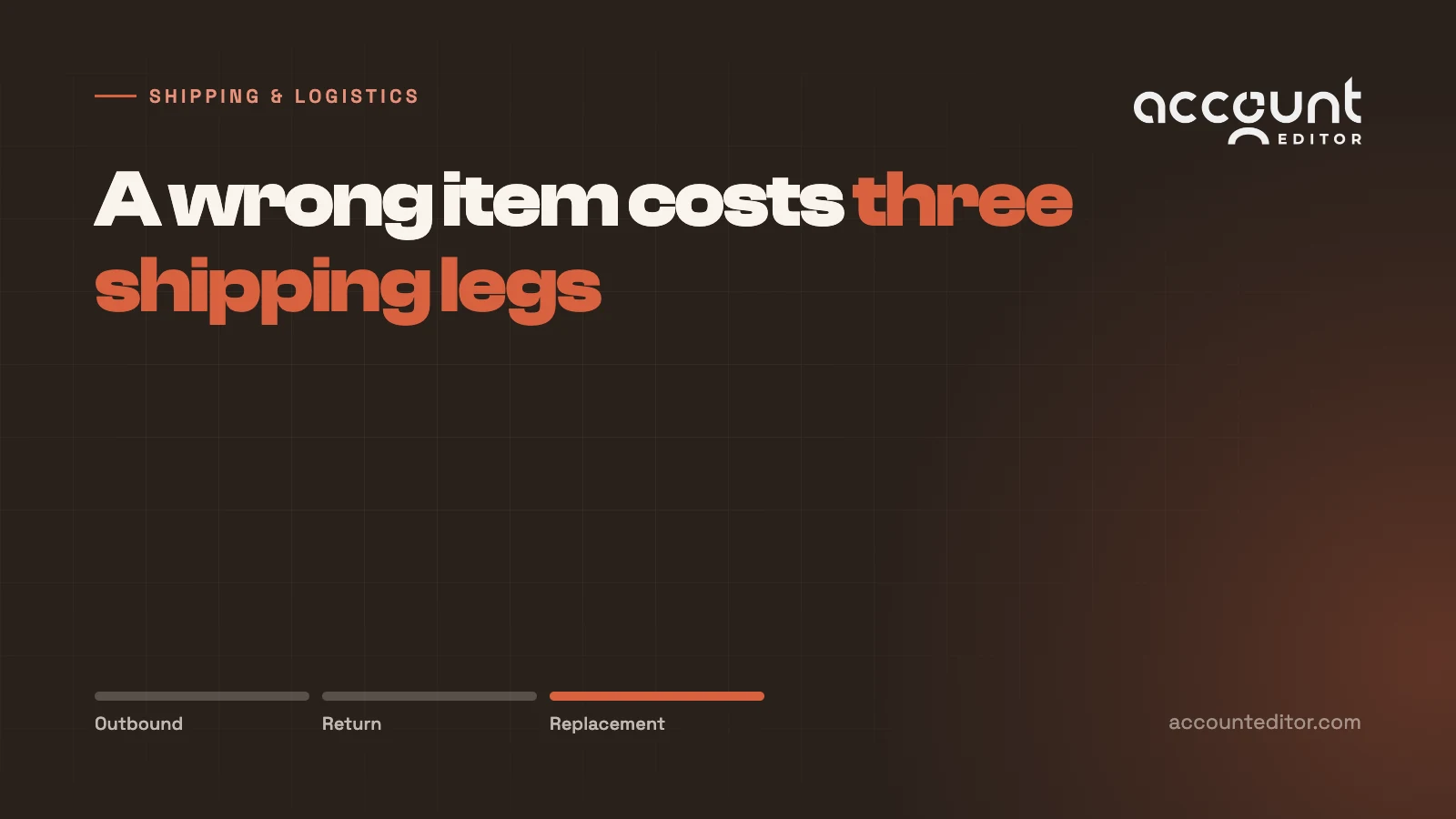
Goods movement | Outbound + inbound | Outbound + inbound + second outbound | None |
Shipping cost | Paid twice | Paid three times | Paid once |
Inventory impact | Restock, inspect, possible markdown | Restock plus second allocation | Reallocated before picking |
Customer effort | Request, pack, ship, wait for refund | Request, pack, ship, wait for replacement | A few clicks on the order page |
Support load | High | High | None when self-serve |
Revenue outcome | Refunded | Retained | Retained, sometimes increased |
Read the last row carefully. A return loses the revenue. An exchange preserves it at significant cost. A pre-fulfillment edit preserves it at no cost, and because the customer is already in an editing interface, it is the one path that can also increase order value rather than reduce it.
How to Prevent Returns Before Fulfillment
Return prevention before shipping comes down to five mechanics. Each one closes a specific path that otherwise ends in a return.
1. Open a Variant Swap Window After Checkout
Let customers change size, colour, or variant themselves in the period after checkout and before picking. This is the highest-leverage mechanic available to any store selling fitted goods, because it converts your single most common return reason into a database update.
The important detail is that swapping is not the same as removing and re-adding. A true swap preserves the line item and recalculates only the difference, which keeps reporting clean and avoids the payment complications of a cancel-and-reorder.
2. Validate Addresses Before the Label Prints
Catch malformed and incomplete addresses at the point the customer can still fix them for free. Validated address suggestions turn a failed delivery — which costs you the outbound parcel, the support thread, and usually a reship — into a single corrected field.
For cross-border orders this compounds, because a failed international delivery also drags in customs handling and duty reconciliation.
3. Let Customers Add Forgotten Items Instead of Reordering
If a customer can add to an existing unfulfilled order, you ship one parcel. If they cannot, you either ship two parcels or handle a cancellation. Adding items to the existing order removes the duplicate-order return path entirely, and because payment is already captured, the additional item requires no new checkout friction.
4. Hold Fulfillment During the Edit Window
An edit window is only real if the warehouse respects it. If your 3PL or OMS pulls orders the moment they are paid, a customer editing at minute three is editing an order that has already been picked.
This is the mechanic most often skipped, and it is the one that makes the other four trustworthy. A short fulfillment hold synchronised to your edit window means every edit lands before the pick, not during it.
5. Set the Window to Your Actual Pick Time
There is no universally correct edit window. The correct window is the time you genuinely have before goods move, which differs enormously between a print-on-demand store and a warehouse that batches at 4pm.
Set it too long and you delay shipping to protect edits that rarely arrive. Set it too short and customers discover their mistake after the window closes, which produces the return you were trying to prevent. Most stores land somewhere between thirty minutes and a few hours, and the right answer comes from your own fulfillment timestamps rather than a benchmark. Your edit window and validation rules should be tuned against that data.
What Return Prevention Looks Like by Store Type
The mechanics are the same everywhere. Which one matters most is not.
Apparel and Footwear
Fit-driven categories carry the highest return rates in retail, and size is the dominant reason. Variant swapping is the priority mechanic here, and it is the one most likely to move the return rate on its own. A store that lets a customer change from a medium to a large before picking has removed the cause of a large share of its returns rather than processing them faster.
Print-on-Demand and Made-to-Order
Once production starts, a return is close to pure loss. There is often nothing to restock and nothing to resell. Short, strictly enforced edit windows paired with a production hold are essential, because the prevention window is measured in minutes rather than hours.
Subscription and Replenishment
Errors here repeat on a schedule. A wrong address or wrong variant that goes uncorrected does not produce one return, it produces one per cycle until someone notices. Allowing edits before each fulfillment run converts a recurring failure into a single correction.
Cross-Border
International reverse logistics is the most expensive version of this problem, and sometimes the item is simply not worth recovering. Address validation and pre-fulfillment correction carry disproportionate value for cross-border sellers, because the alternative is frequently writing the order off entirely.
B2B and Wholesale
Order values are larger and line items are more numerous, so a single error is expensive and a manual email correction is slow. B2B buyers increasingly expect to adjust their own orders, and structured editing removes long approval threads without giving up control.
How to Measure Prevented Returns
The difficulty with prevention is that success looks like absence. A return that never happened does not appear in any report, which makes prevention work easy to under-credit and easy to cut.
Track these instead:
Pre-fulfillment edit volume — how many orders were corrected before picking
Variant swap rate — swaps as a share of orders, read against your size-related return rate
Address correction rate — corrections made before the label printed
Return rate by reason code — the number that should fall is size and address, not changed-mind
Edit-to-return ratio — edits divided by returns over the same window, tracked as a trend
The cleanest read comes from segmenting return rate by reason code before and after enabling self-serve edits. If preventable reasons fall while genuine remorse holds steady, prevention is working exactly as intended. Operations analytics that reconcile to your Shopify ledger make this measurable rather than anecdotal.
Conclusion: Returns Are a Fulfillment Timing Problem
Most return-reduction advice treats returns as a customer behaviour problem, to be managed with better policies and smoother portals. A large share of returns is really a timing problem. The customer knew about the mistake within hours of checkout. Your system gave them no way to act on it until the parcel had already travelled to them and back.
Close that gap and a category of returns stops being generated at all. The customer fixes their own order, the warehouse picks it correctly the first time, the revenue stays, and no one files a ticket. Everything downstream of that — the portal, the exchange flow, the reverse logistics contract — is for the returns you could not prevent, which is a much smaller and much more manageable set.
Returns you process are a cost centre. Returns you prevent are margin.
Ready to Cut Your Return Rate at the Source?
If size swaps, address corrections, and forgotten items are showing up in your returns, the fix sits before fulfillment rather than after delivery.
Account Editor gives Shopify customers controlled, self-serve editing in the window between checkout and picking — variant swaps, validated address changes, added items, and cancellation logic, with fulfillment holds that keep your warehouse in step and reporting that shows what it prevented.
See how Account Editor prevents returns before the package ships.