A picker grabs a medium instead of a large. The parcel ships, arrives, and the customer opens a box containing something they cannot use.
Most stores book that as a return. It is not a return. A return is a customer changing their mind about a correct order. This is a store shipping the wrong goods and then paying for the privilege of getting them back — and the cost profile is completely different.
Ecommerce fulfillment error rates typically run between 1% and 3%, with the best operations reaching a fraction of that. And roughly 23% of ecommerce returns happen because the customer received the wrong product — making accuracy the single largest preventable cause of returns in most stores.
This guide covers what a mis-ship actually costs, why it happens, and the correction window most stores never open.
The full cost stack of one wrong shipment
Why 1% sounds tolerable and is not
The four causes, and which are yours to fix
The pre-fulfillment window that removes a whole class of them
How to measure accuracy so the number means something
The Full Cost of One Wrong Shipment
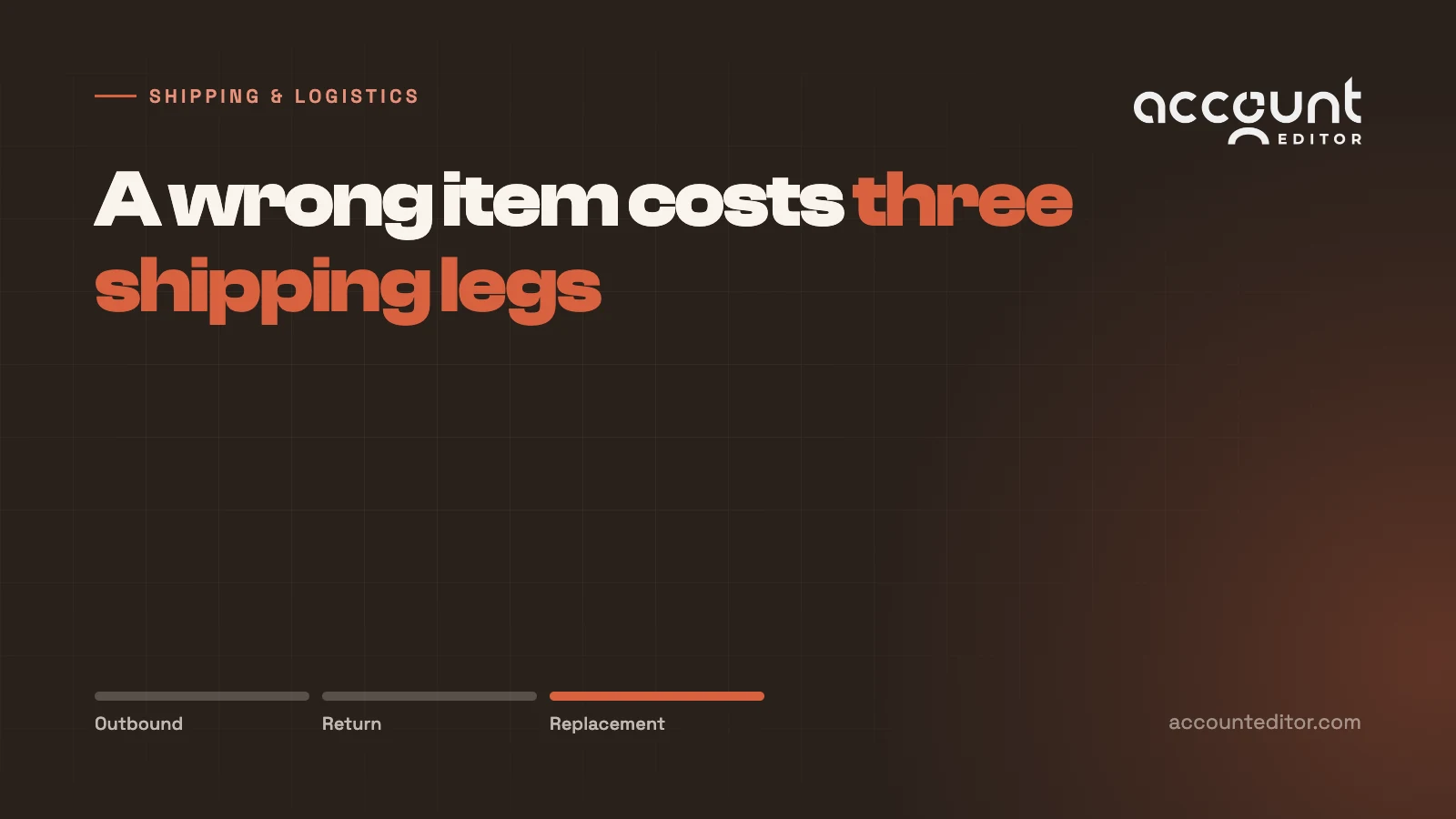
A mis-ship is unusually expensive because you pay for the transaction twice and recover the goods once, if at all.
Cost | Who absorbs it | Recoverable? |
|---|---|---|
Original outbound shipping | You | No |
Return shipping for the wrong item | You — always, since it is your error | No |
Replacement outbound shipping | You | No |
Pick, pack and receive labour | You, twice over | No |
Inspection and restocking | You | Partially |
Support handling | You | No |
The correct unit, held out of stock meanwhile | You | Opportunity cost |
Note the second row. On a customer-initiated return you may charge for return shipping or apply a restocking fee. On a mis-ship you cannot — the error is yours, and any attempt to pass the cost on turns an operational problem into a reputational one.
Industry estimates put the saving from eliminating a single recurring mispick pattern at around $100 per avoided error, and fulfillment errors across a 1,500-orders-per-day operation have been estimated to cost upwards of $195,000 annually.
Why "99% Accurate" Is Not Reassuring
Accuracy is usually quoted as a percentage, which is exactly the format that makes it sound solved. Convert it to counts and it stops sounding fine.
Accuracy | Wrong per 1,000 orders | Wrong per month at 10,000 orders |
|---|---|---|
95% | 50 | 500 |
99% | 10 | 100 |
99.5% | 5 | 50 |
99.9% | 1 | 10 |
At 95% accuracy and 1,000 orders, fifty customers get the wrong item. That is fifty return shipments, fifty restocking events, fifty replacement orders, and fifty support conversations — from a figure that reads as "95% good."
And the retention cost sits underneath all of it. Roughly 70% of shoppers say they are unlikely to buy again after a delivery goes wrong. On most lifetime-value assumptions that dwarfs the operational total.
The Four Causes
Mis-ships come from four distinct places, and they are not equally fixable.
1. Warehouse Pick Errors
Similar SKUs, adjacent bin locations, poor barcode discipline, agency staff at peak. This is the cause everyone thinks of, and it is addressed with scanning, slotting, and pick verification rather than with software on the storefront.
2. Stale Order Data
The warehouse picked correctly — against an order that was no longer current. The customer changed a variant, the edit applied in Shopify, and the fulfillment system had already downloaded the original. The pick was accurate and the shipment was wrong, which is why fulfillment holds matter: without one, your own edit feature manufactures mis-ships.
3. Customer Ordered the Wrong Thing
Strictly not a mis-ship — you shipped what was ordered — but it produces an identical outcome: wrong goods, return, replacement, support thread. The customer usually knows within hours. Whether that becomes a cost depends entirely on whether they can fix it themselves.
4. Wrong Destination
The right item to the wrong place. Distinct enough in cost and cause to treat separately, and covered in what failed deliveries cost.
Causes 2 and 3 are the interesting ones, because both are fully preventable before anything moves, and neither requires touching warehouse operations.
The Pre-Fulfillment Correction Window
Between payment and picking, the order is a database record. Changing it costs nothing. After picking, changing it costs the entire stack in the first table.
Three mechanics close causes 2 and 3.
Let the Customer Correct Their Own Order
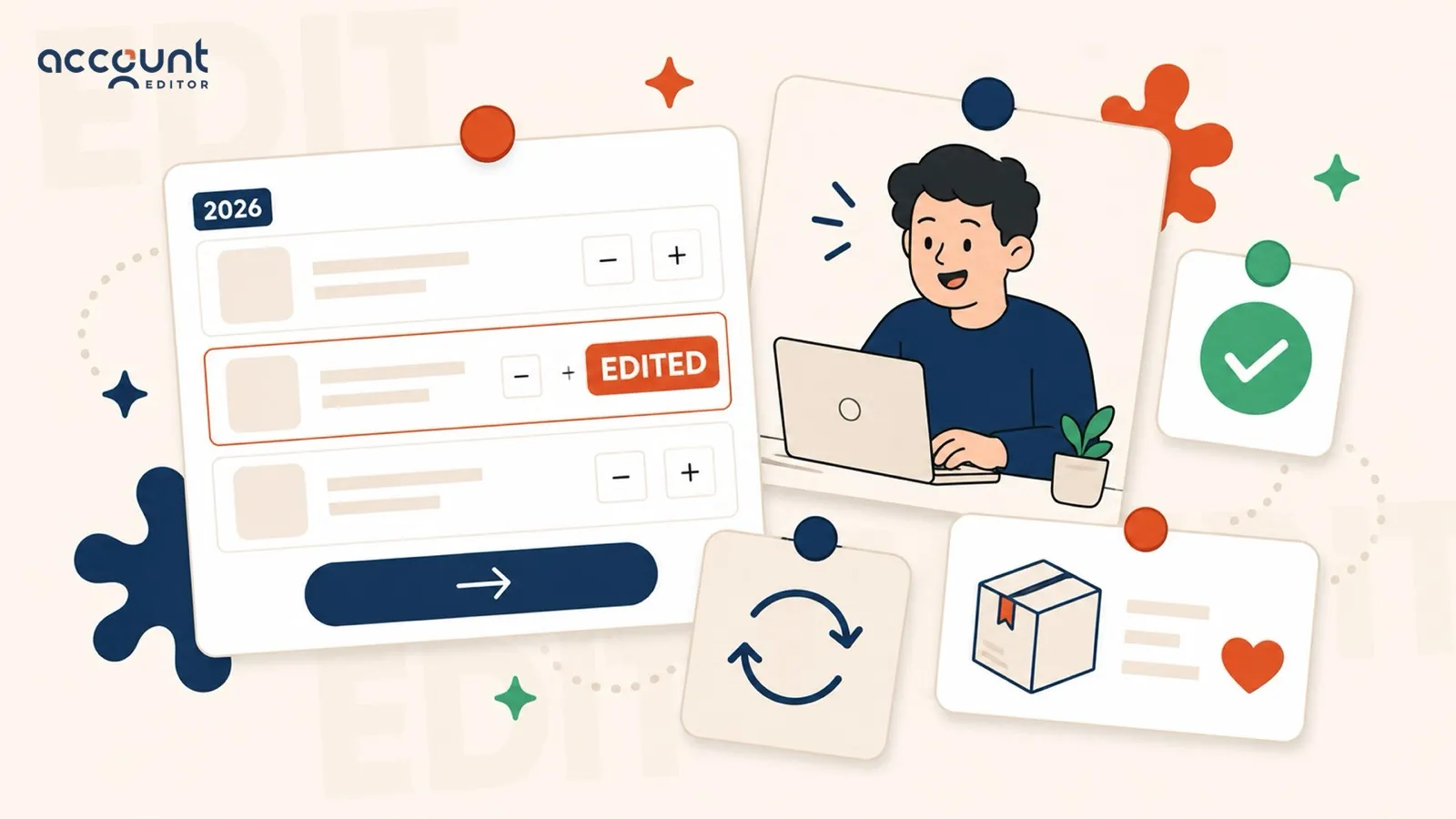
A customer who realises they picked the wrong variant an hour after checkout has information you need and no way to give it to you. A variant swap they perform themselves converts a future wrong-item return into a corrected line item. This is the cheapest accuracy improvement available to any store, and it does not touch the warehouse.
Hold Fulfillment Until the Window Closes
Cause 2 exists only because warehouses can see orders that are still changing. Match a fulfillment hold to your edit window and the warehouse only ever picks final orders. Skip it and every edit you accept becomes a coin flip.
Make the Order Legible Before It Ships
Show the customer what is actually coming — variant, quantity, destination — somewhere they will read it, which in practice means the confirmation email and order status page. Errors get caught when they are visible outside a form field. An order nobody re-reads is an order whose mistakes surface on delivery.
Measuring Accuracy So the Number Means Something
A single blended accuracy percentage hides everything actionable. Split it.
Wrong-item rate by cause — pick error, stale data, customer error, wrong destination. Four numbers, four different owners. One blended figure tells you nothing about what to fix.
Edit-to-fulfillment timing — how many edits land after the order reached the warehouse. Any figure above zero is cause 2, quantified.
Pre-fulfillment correction volume — customer corrections made before picking. Every one is a mis-ship that never happened.
Cost per incident, fully loaded — both shipping legs, labour on both sides, support time. Calculate it once properly and the business case for prevention makes itself.
Repeat-purchase rate after an incident — the number nobody tracks and the one that matters most.
The pairing that tells the story is correction volume against wrong-item rate by cause. If corrections rise while stale-data and customer-error mis-ships fall, prevention is working. Operations analytics that reconcile against Shopify make that visible across the order book rather than one ticket at a time.
Conclusion: Two of the Four Causes Are Free to Fix
Warehouse accuracy is a real discipline with real costs — scanning hardware, slotting work, training, verification steps. Worth doing, and slow.
But two of the four causes of wrong shipments never touch the warehouse. Stale order data is a sequencing problem, solved by holding fulfillment to match your edit window. Customer error is an access problem, solved by letting people correct their own orders while correction is still free.
Both are configuration rather than capital expenditure, and both act on the window between payment and picking — the one moment when a wrong order costs nothing to make right.
Stop Shipping Orders You Already Know Are Wrong
If your wrong-item returns include variant mistakes customers spotted hours after checkout, those are not fulfillment failures. They are correction failures.
Account Editor lets customers fix variants, quantities and addresses before picking, with fulfillment holds that keep your warehouse working from final orders and reporting that shows what was corrected before it shipped.
See how Account Editor prevents wrong shipments before they leave.